
Software solutions
We offer a range of validated simulation tools for tribology and dynamics of mechanical components. They are deployed as our flagship stand alone software (TriboDENS PHENIX) or add-on libraries on other software platforms.
List of our simulation solutions
- Gear friction calculation
- Gear wear calculation
- Gear lubricated dynamic calculation
- Rolling element bearings lubricated models (stiffness, damping, friction and wear)
- Journal bearing (stiffness, damping, friction and wear)
- Generic elastohydrodynamic (EHL) and hydrodynamic contact modeller
- Generic boundary (roughness) friction modeller • Wet clutch modeller
- Seal friction and wear
- Tooth Contact Analysis (TCA) from measured surfaces
TriboDENS PHENIX
All friction and wear modellers can directly obtain data from surface topography measurement machines and rheometers.
TriboDENS PHENIXTM is an advanced mechanical component and contact lubrication modelling. Bearings, gears and seals are examples of components. Elastohydrodynamic (EHL), hydrodynamic, boundary lubrication contacts can also be analysed.
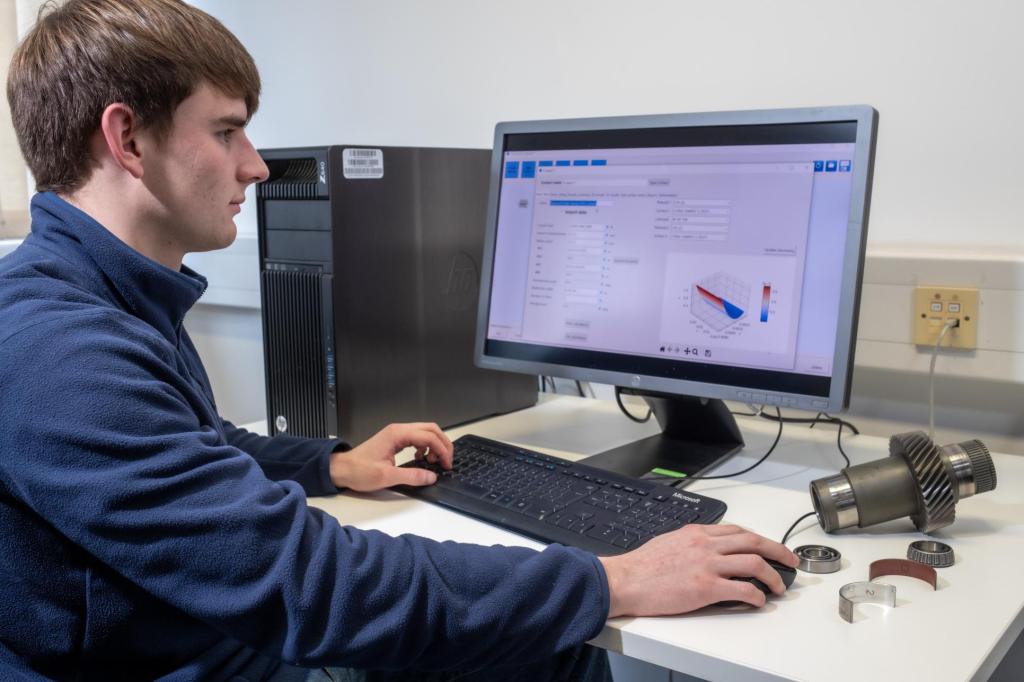
Detailed contact analysis includes friction calculation, wear analysis,
life prediction and multi-objective optimisation for lubricated contacts. Generic surface profile and rheology measurements can be imported directly from measurements machines.
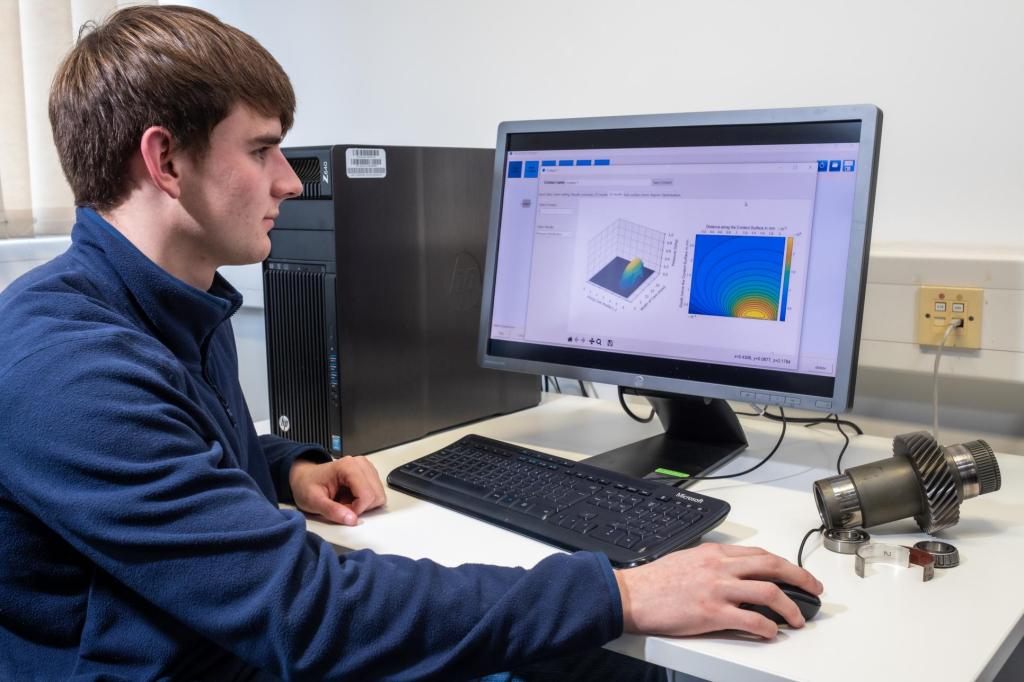
Our software includes extensive lubricant, material and real surface libraries. Surface topography measurement can be directly imported from widely used microscopes.
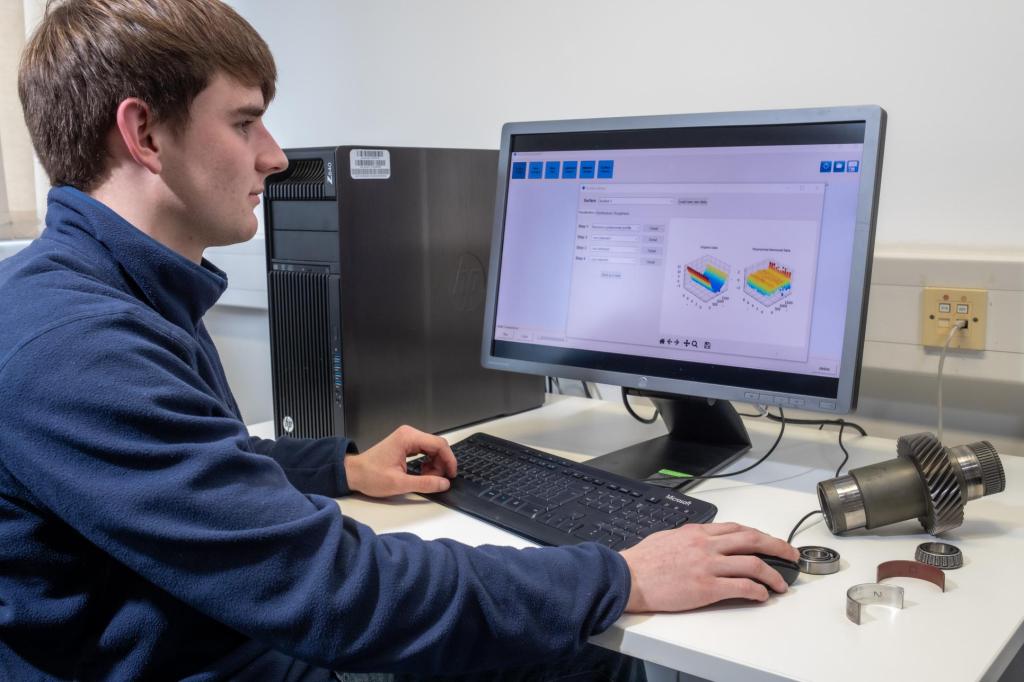
Demo: Simulation of Elasto-hydrodynamic (EHL) Contacts in TriboDENS-PHENIX
Gears, rolling element bearings, valvetrain and many other applications are dominated by EHL regime of lubrication. Simulation of these contacts is extremely challenging, but they are key to optimise the system for minimum power loss and maximum life.
TriboDENS-PHENIX has streamlined the simulation process of EHL contacts, using several solver technologies at different levels of complexity, real world surface profile and roughness, misalignment and generic contact geometries. Friction, durability and wear, lubricant film thickness, pressure distribution, temperature and many more, are examples of the results obtained from our tool.
Demo: Simulation of a Journal Bearings in TriboDENS-PHENIX
Journal bearings are one of the oldest and most common bearing types. Their applications expand across many fields including, ICE engines, transmissions, wind turbines, electric machines and so on. Simulation of these components must include both tribological analysis (e.g. friction, wear, power loss) and dynamic characteristics such as damping and stiffness coefficients in different degrees of freedom.
TriboDENS-PHENIX has streamlined and democratised the simulation of tribological and dynamic characteristics for journal bearings. Real-world measured rough surfaces, rheological measurement, cooling and oil supply set-ups, as well as a multi-objective optimisation can be conducted within the same environment.
Demo: Simulation of a Generic Hydrodynamic Contacts
Hydrodynamic regime of lubrication is dominant in contacts with low to moderate pressure, such as journal bearings or piston-ring conjunctions. A generic hydrodynamic solver helps to simulate these contacts in a flexible manner, regardless of the application.
TriboDENS-PHENIX has streamlined and democratised the simulation process for lubrication, friction, durability and wear in these contacts. Real-world measured rough surfaces, rheological measurement and measured surface profile can be included in the simulation, and a multi-objective optimisation can be conducted within the same environment.
Demo: Simulation of Hypoid Gears in 2 Minutes
Tribological analysis of hypoid gears is challenging and time consuming. TriboDENS-PHENIX has streamlined and democratised the simulation process for lubrication, friction, durability and wear in these critical components.
Simulation of Piston-Ring Conjunctions in TriboDENS-PHENIX:
Piston-ring conjunctions are responsible for significant losses in engines. The sealing functionality of the ring is also directly affected by wear on the ring and the liner. Simulation of these contacts help predicting their tribological behaviour and optimise them for the maximum efficiency and life.
TriboDENS-PHENIX has streamlined the simulation process of piston-ring conjunctions, providing an end-to-end tool for prediction of friction, power loss, wear, pressure and lubricant film thickness based on realistic rough surfaces, geometry of the ring and the liner, material and lubricant properties and combustion pressure.
 TriboDENS